Why did you support and participate in the 500 Women Scientists #SciMomJourney Campaign?
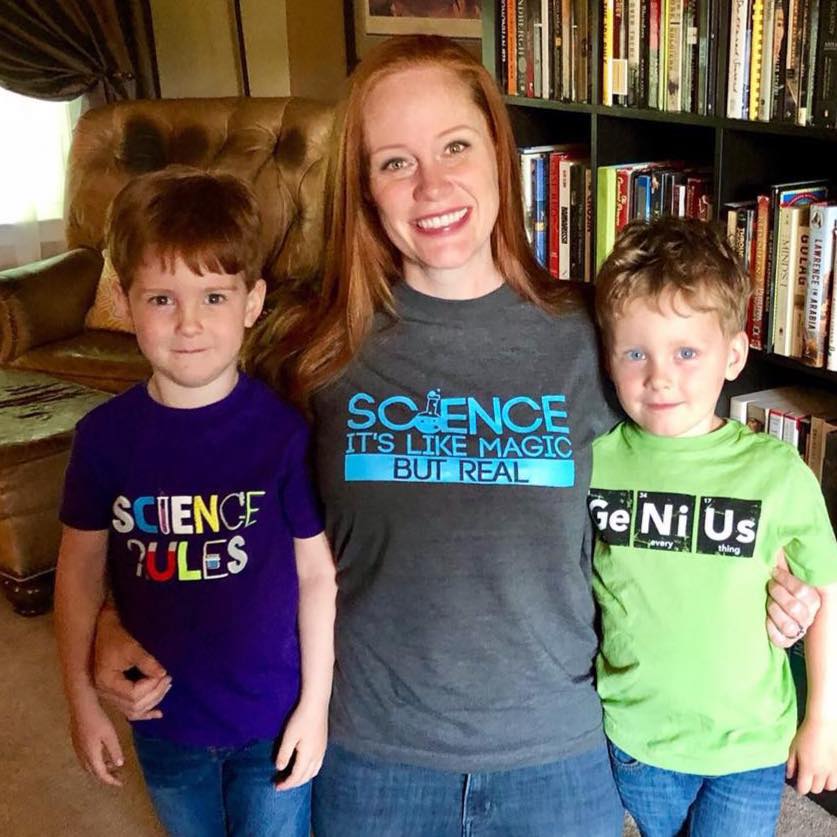
My twin boys were the result of multiple different types of fertility treatments and that process was really difficult and lonely for me. I was honored to participate in the #SciMomJourney campaign so that I could provide other women with the support and guidance that I wish I’d had during that journey, and give them resources to help them thrive as mothers and women in science after conception, childbirth and beyond - Wendy Bohon
I was excited to begin my journey to become a scientist mom but didn’t always feel like I was in a culture that would support that journey. I knew that becoming a mom wouldn’t change my dedication to my job or my productivity but I felt I had to prove that again and again. I wanted to participate in this initiate to help other moms and aspiring moms to see a path forward where they can excel at both being a mom and being a scientist. To achieve this, we need support from our work environments. Our institutions need to be better and that only happens if we speak up. We can ensure that scientist moms have the tools they need to succeed as both moms and scientists - Gretchen Goldman
I think being a scientist mom is a really important and under discussed issue impacting many women’s careers. I really wanted to highlight some of the unique, and not so unique, challenges facing women as they pursue their dreams and goals in STEM fields. We really need to advocate for increased women’s reproductive rights and support in the workplace, it’s one of the only ways we are ever going to achieve true gender equity - Elizabeth (Liz) McCullagh
I am pretty new at my role as a mother, but I’ve already found that being a mom comes naturally to me. The times that I’ve found it difficult are usually when I’m trying to juggle too many things that are work-related. Writing reports, preparing presentations, and revising manuscripts all take me more time than they probably should because I second-guess myself. The nice thing about being a mom is that I never question my decisions or regret spending time with my son. Being a mom has helped me realize that there is more to life than getting that next publication, credential, or position. I wanted to help other moms realize that it’s possible to be great in multiple roles, and to honor the ebb and flows of work-life balance - Theresa Jedd
I think it’s important to work to create a culture in science where people feel safe to discuss challenges in their lives. There’s so much pressure to dehumanize science and to project an image of ourselves in our role as scientists as these completely objective beings separated from the rest of our lives, which is ultimately really harmful, not just to individual scientists, but to science itself. The discomfort we tend to have discussing subjects like pregnancy, breastfeeding, infertility, and miscarriage makes a lot of women feel very alone. I’m hoping that my participation has helped women feel less alone and opened the door to have those difficult conversations - PJ Teichholtz
What challenge have you faced as a science mom and how were you able to find a solution?
I became a science mom at the end of my PhD. I was fortunate to have been able to work from home after my daughter was born and finish my thesis and study for my defense. This was necessary at the time, but I am not sure how I did it. I look back now and was probably way more stressed out than I realized, but I also did it and if I can do that, I can do just about anything. I have struggled with that ever consuming feeling of guilt about spending time at work and time at home. It is either a feeling of not doing enough work, or not being home enough with my family. I have tried to limit my working hours to between 40-50 hours a week as much as possible. This does make me plan my weeks out extensively and I am constantly thinking about how to best plan experiments to fit within certain time frames as much as possible. I did have a previous postdoc where my attempt to balance my work/family time was not supported and ultimately had to make the decision to leave the project and lab. This is always hard as you put lots of time and energy into scientific projects. However, I was able to transition to a lab where the PI also has two kids and is 100% supportive of me and my family. Finding that support from my new PI and from the new department in which I work where there are numerous ladies with families has been a game changer. I am more confident now about my abilities to navigate the crazy world of academia as a science mom. This has also made me a better scientist and allows me the time to do special things with my husband and daughter with way less guilt than before. We are lucky to be so close to such great outdoor activities throughout the year. For example, we go skiing every Sunday during the winter time and in the summertime, we go to Yellowstone National Park and camp a lot! As I move forward with my career, my goal is to support the next generation of women who want to be science moms! - Emma Loveday
I think my biggest challenge has been not being too hard on myself for leaving my field. I had my first daughter while in graduate school and it seemed like my only goal should be to finish my PhD and be there for my family. I was able to finish my degree but when I asked my adviser about publishing, I was given a long list of things I needed to do. The only job I was able to find after graduating was as a part-time adjunct and while I wanted to publish, I also needed to get paid. So I declined.
My only solution so far has been to move into the field of science writing and find a 9-5 job that I don't have to take home with me. This allows me to be with my family and also do advocacy work on the side. I still give talks and do science writing/communication in astronomy which allows me to keep up with what is going on in the field. In all my advocacy my goal is to make science more inclusive on all levels-from the science we do to who is doing the science. The one thing I always try to do is be honest with people when they ask me what they should do to be a scientist. My response is always: "Build your network now. You need people around you who will support you and give you those pushes that propel you towards your next goal. You can't do it alone and you shouldn't be expected to." - JoEllen McBride
What advantages do you think being a Scientist has given you during your parent experience?
I thought that having children would hold me back in my career. I was wrong as it actually taught me some new skills I now use to communicate science to the general public. I shared my love of insects with my children first, and then realized I could share with anyone. I started small with elementary school demos sharing my insect collection with 10-20 toddlers. Now I participate in the Philadelphia Science Festival where I can share my love of science with thousands of people. Becoming a parent has given me confidence and a passion for sharing my love of science - Tanya Dapkey
Being a scientist has given me confidence in my ability to make decisions and to balance multiple tasks. It has also taught me not to sweat the small stuff, communication skills, and the ability to work well with others. All of these attributes are important aspects of parenting, as well. Having an understanding of and appreciation for the natural world and a strong desire to be a lifelong learner have influenced how I teach my children and how we spend our time together. It’s taught me to find teachable moments in our everyday lives and foster my children’s curiosity - Emily Lescak
Being a scientist has really enabled me to broaden my children’s learning experiences, and it’s helped me learn from them too. The conversations we have during dinner often extend beyond ‘how was school?’ to things like “how does solar power work” or “why are microplastics bad for fish?” We do experiments together at home sometimes, they get to come out to do field work with me every once in awhile, it’s a blast. At the end of the day, even though balancing parenthood with being a research scientist and faculty member is challenging, I wouldn’t trade it for anything else in the world. Being curious is a big part of my job, and I think this helps me better understand how my children are experiencing life, we can relate to each other via that shared curiosity - Susanne Brander
Having two children while also working full time and pursuing a Master’s degree was extremely challenging and isolating. It really brought into focus the lack of supports we have for women and families: short maternity leave, unreasonable expectations about meeting work and family responsibilities, inadequate lactation facilities, and many others. Instead of just being privately frustrated and angry about difficulties and injustices, I was able to use my social science training to understand the problems involved, collect data, and publish research to support better lactation policies and advocate for other moms.
Being a scientist has also helped me keep calm in the midst of so many pressures and so much advice about raising kids, since I feel confident about evaluating evidence to determine what I should really prioritize and what is just noise - Dare Henry-Moss
There are many advantages to being a scientist-parent. First, I am a visible minority in a largely male dominated field, and I am an example to my daughter that girls can pursue a career in STEM and Entomology in particular. Next, as an instructor, I adapt my teaching skills depending on student needs. I can use the same skill sets while parenting and that has enabled me to be more patient and creative with my daughter. Lastly, I get to be a kid with my kid! As a researcher, I love learning and discovering new things about the natural world. As a parent, I get to re-experience discoveries that I uncovered LONG ago with my daughter and appreciate the subtle yet magnificent things that nature has to offer (like Rolly Pollies and caterpillars!) - Tania Kim
Photo by guille pozzi on Unsplash